

achar recipes
Jolpai Achar Recipe: Small-Batch Olive Pickle
Make a small batch of tangy jolpai achar with a clean jar, measured salt and sugar, careful cooking and refrigerated storage.
Quick answer: For a refrigerator pickle, soften 500g cleaned jolpai, cook with a measured spice paste, salt, sugar and enough vinegar for the chosen recipe, then cool completely before transferring to a clean dry jar. Keep refrigerated and make a fresh batch if spoilage signs appear.
Ingredients for one small batch
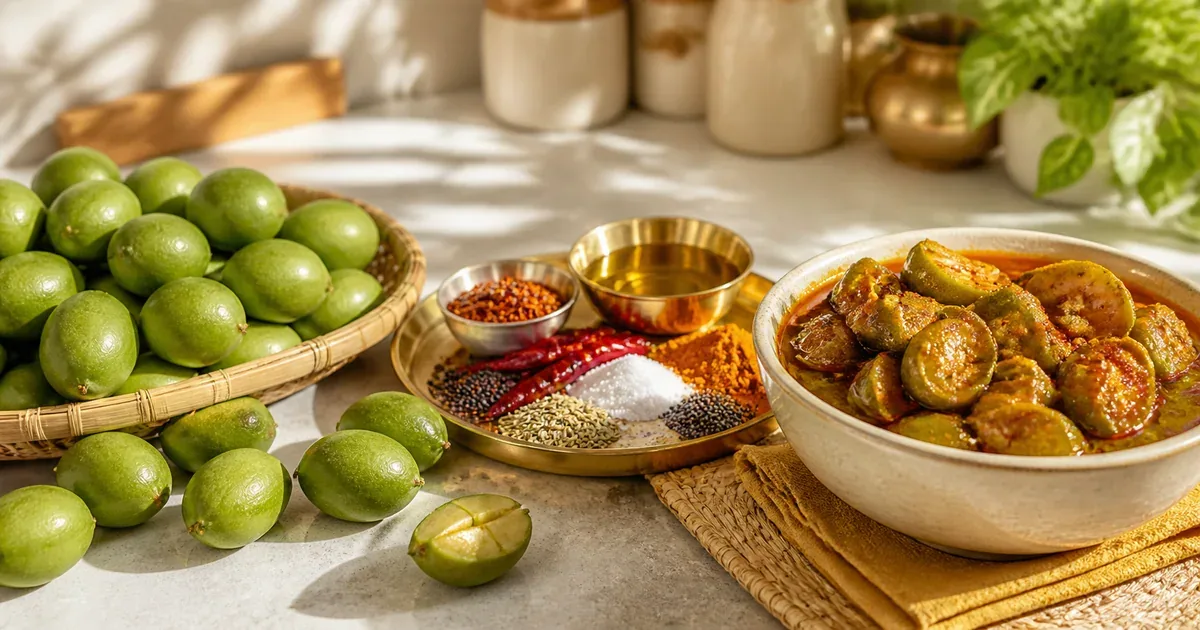
Use 500g sound jolpai, 2 tablespoons mustard oil, 1–2 teaspoons chilli to taste, 1 teaspoon turmeric, 1 teaspoon roasted cumin, salt, sugar or jaggery to taste and food-grade vinegar. This is a refrigerator recipe, not a shelf-stable canning process.
Prepare and cook
Wash the fruit under running water, discard damaged pieces and dry. Boil until just tender, drain, then lightly crack each fruit. Heat oil and spices carefully, add jolpai, salt and sweetener, and simmer until flavours combine. Add vinegar according to taste while maintaining a clearly acidic profile.
Cool before jarring
Use a thoroughly cleaned, dry glass jar and utensil. Let the achar cool before closing to reduce trapped condensation. Label the preparation date and refrigerate. Always use a clean dry spoon.
Know when to discard
Home acidity and moisture vary, so do not assume room-temperature safety. Throw away the batch if it develops mould, swelling, leakage, unexpected bubbling, slime or an abnormal smell. When in doubt, do not taste it.
Frequently asked questions
Can this jolpai achar stay at room temperature?
It is designed as a refrigerator pickle, not a validated shelf-stable canning recipe.
Can I reduce the sugar?
Adjust sweetness to taste, but keep the vinegar and cold-storage safety approach; sugar reduction changes flavour and texture.
Why must the spoon be dry?
A clean dry spoon limits contamination and extra water entering the jar.