

baking guides
How to Temper Chocolate at Home
Use the seed method, accurate temperature control and a quick set test to temper real chocolate for glossy shells and a clean snap.
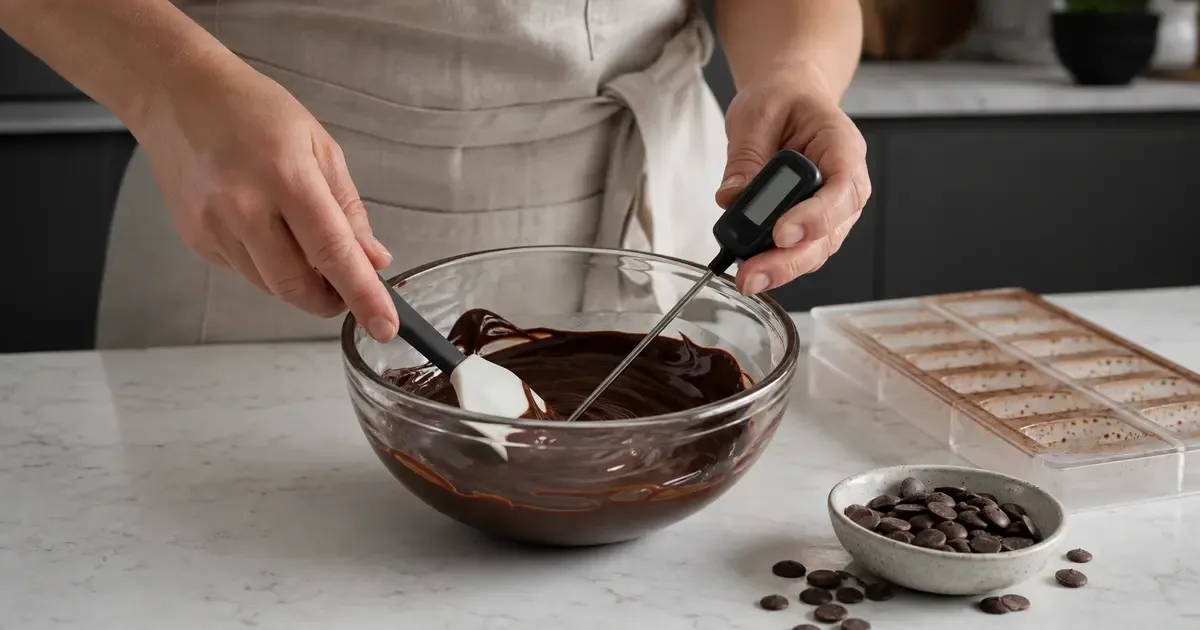
Quick answer: Tempering controls cocoa-butter crystallisation so real chocolate sets glossy, firm and clean-snapping. The home-friendly seed method melts most chocolate, cools it with finely chopped tempered chocolate, then holds a working temperature. Exact curves vary by brand and type, so the pack's manufacturer curve takes priority over a generic number.
Know when tempering is necessary
Temper chocolate for moulded bars, bonbon shells, dipped pieces and decorations that need shine and snap. You usually do not need to temper chocolate that disappears into cake batter, brownies, mousse or ganache. Compound coating follows its own pack method and normally does not use the classic cocoa-butter curve.
Seed method: the working sequence
- Chop real chocolate evenly; reserve about one quarter as dry seed.
- Gently melt the rest, staying within the manufacturer's initial range.
- Remove from heat and stir in seed gradually.
- Keep stirring as the batch cools toward its working range.
- Remove unmelted seed if needed, then hold the working temperature without overheating.
As broad professional benchmarks, dark chocolate often works around 31–32°C and milk or white around 28–30°C, but use the exact pack curve.
Test before filling every mould
Spread a thin streak on parchment or dip a clean metal spoon. In a cool room it should begin setting within a few minutes with an even satin gloss and no grey streaks. A slow, dull or tacky test means the crystallisation or room conditions need correction.
Troubleshoot the Bangladesh kitchen
- Too thick: the chocolate may be over-crystallised or too cool; warm very briefly within range.
- Dull or streaky: temperature curve or agitation may have missed the target.
- Won't set: room temperature may be too high.
- Grainy instantly: check for water contamination or scorching.
Keep bowl, thermometer and spatula dry. Air conditioning or the coolest dry working period can make August tempering more repeatable. Begin with a small batch and record temperatures.
Products in this guide
Prices and stock are from the catalogue at the site's last update. They can change afterwards; confirm again at checkout.
| Product | Pack size | Current price | Unit price | Availability |
|---|---|---|---|---|
| Lindt Dark Chocolate Bar 100g – 70% Cocoa | 100g | ৳630 | ৳630 / 100g | In stock |
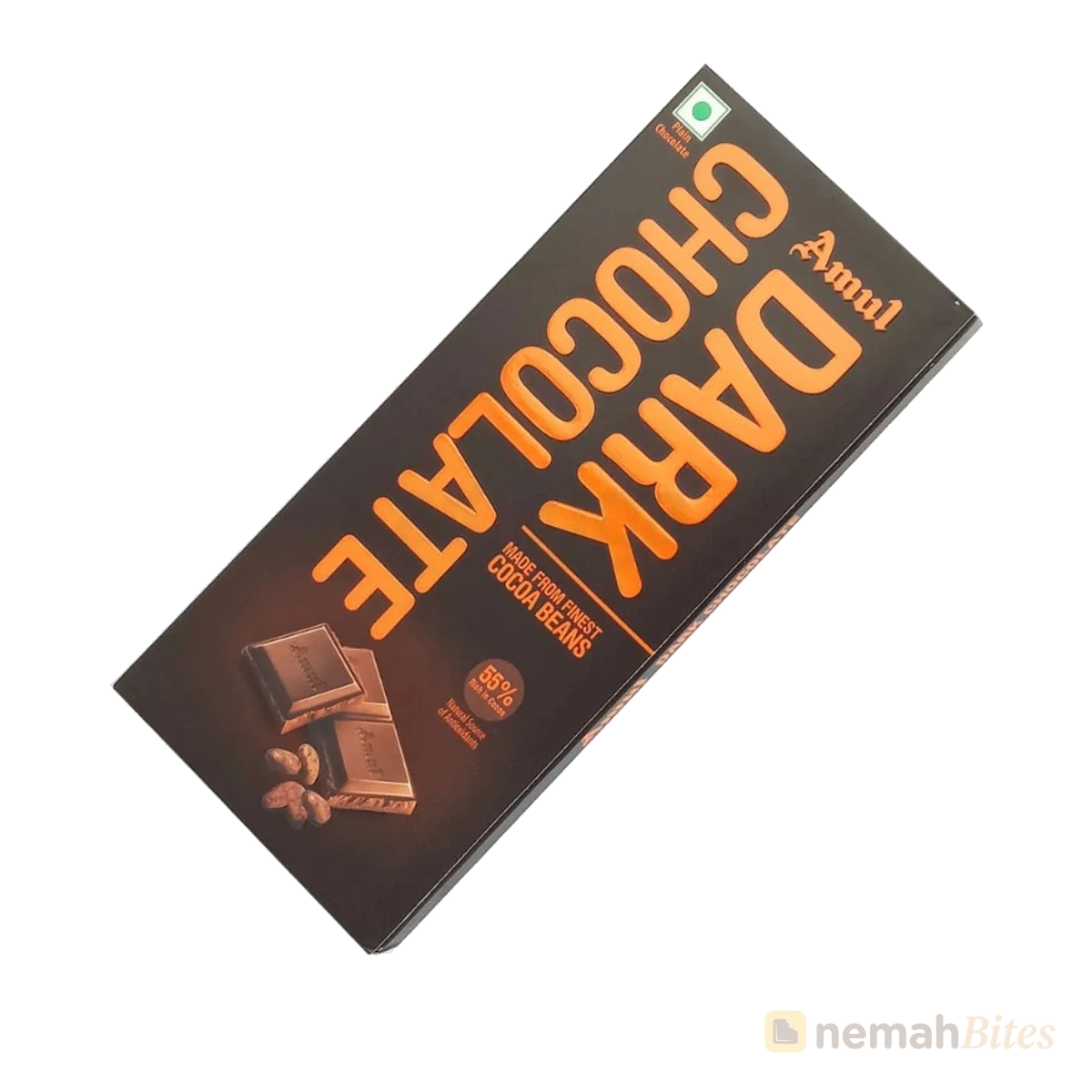
| Amul Dark Chocolate Bar 125g | 125g | ৳411 | ৳328.80 / 100g | In stock |
| Simple White Chocolate 100g | 100g | ৳342 | ৳342 / 100g | In stock |


Frequently asked questions
What temperature should I temper dark chocolate at?
Many dark couvertures work near 31–32°C after crystallisation, but always follow the exact manufacturer's curve for your product.
Can I temper chocolate without a thermometer?
Experienced chocolatiers can use other cues, but a digital thermometer gives a home baker much more repeatable results.
Why is my tempered chocolate dull?
The curve, seed quantity, stirring, working temperature or room temperature may be off; run a small set test before moulding.